Spending long hours on your feet is a reality for millions of workers. Some people stand behind counters, others move around busy workplaces, and many switch between standing and walking throughout the day. Although these activities are part of normal work, prolonged standing can become uncomfortable when the body doesn’t receive enough support or opportunities to change position.
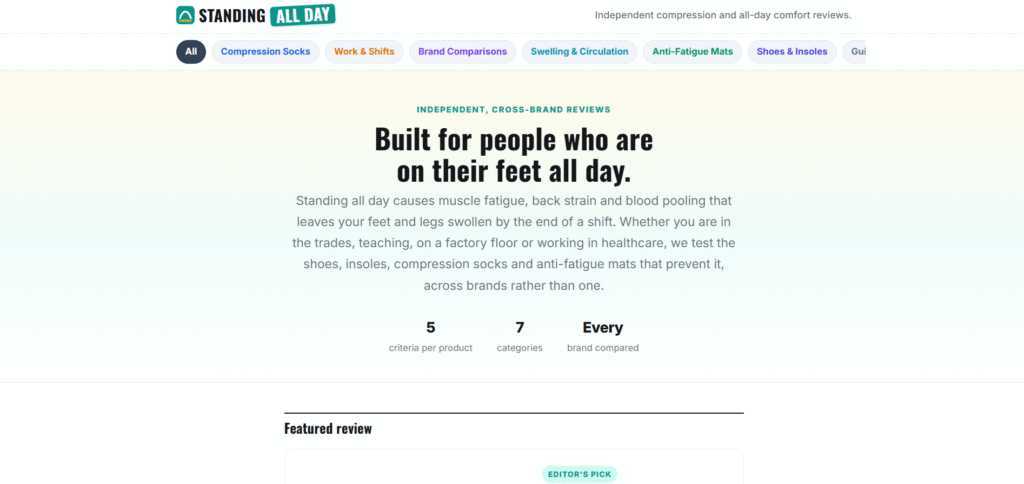
StandingAllDay.com is a useful focus for exploring practical solutions for people who spend much of their day standing. From selecting appropriate footwear to improving workplace ergonomics, small adjustments can help create a more comfortable routine.
Understanding Prolonged Standing
Standing for a few minutes is very different from standing for an entire shift. During extended periods, the feet and legs continuously support the body while muscles work to maintain balance.
Workers may experience tired feet, heavy legs, general stiffness, or discomfort after several hours. The environment can make these sensations more noticeable, particularly when someone stands on hard flooring or wears unsuitable shoes.
Understanding these factors makes it easier to identify areas that can be improved.
Comfortable Footwear Should Be a Priority
If you stand all day, your shoes are more than just part of your outfit. They are an important part of your working equipment.
Choose footwear that fits properly and provides appropriate support for your activities. Your toes should have enough room to move naturally, while the heel should feel secure.
Depending on the profession, other features may also be important. Slip-resistant soles can be useful in kitchens, while protective footwear may be necessary in industrial workplaces.
Don’t Wait Until Shoes Become Uncomfortable
A common mistake is continuing to use work shoes long after their support has deteriorated.
Inspect your footwear periodically. Look for worn soles, damaged cushioning, uneven wear, or areas that cause friction.
If a pair no longer provides the comfort and support it once did, replacing it may be a sensible investment.
Improve the Surface Beneath Your Feet
The floor is another important part of your working environment.
Concrete, tile, and other hard surfaces can feel unforgiving after several hours. If you work at a stationary workstation, an anti-fatigue mat can provide an additional layer of cushioning.
A mat should be appropriate for the environment, remain stable, and not interfere with workplace safety.
Keep Your Body Moving
One of the simplest strategies for prolonged standing is regular movement.
Instead of holding one position for hours, look for natural opportunities to move. Take a few steps, adjust your stance, or shift your weight.
If your job involves walking between tasks, that movement can already provide useful variation. If you remain at one workstation, intentionally changing your position can become part of your routine.
Work on Your Posture
Good posture can help you work more comfortably.
Try to distribute your weight rather than consistently leaning on one side. Keep your shoulders relaxed and avoid locking your knees.
Your posture should also change naturally throughout the day. The objective isn’t to find one perfect standing position and hold it for hours.
Create an Ergonomic Work Environment
Workplace ergonomics can be especially valuable for people who stand regularly.
Look at the height of counters, tables, shelves, tools, and equipment. Items you use frequently should ideally be positioned so you can access them without excessive bending or stretching.
A better workstation can reduce unnecessary movements and make everyday tasks more efficient.
Make Breaks Part of Your Strategy
Breaks can provide your body with an important change of position.
If you have the opportunity to sit, use it. If sitting isn’t practical, walking slowly or performing gentle movements can still provide a break from stationary standing.
Employers and employees can both contribute to a workplace culture that recognizes the importance of reasonable rest periods.
Choose Suitable Socks
Work socks can make a noticeable difference during a long shift.
Choose socks that fit comfortably and don’t bunch up inside your shoes. Breathable or moisture-managing materials may be useful for people working in warm environments.
If you are considering compression socks for a health-related reason, appropriate professional guidance can help determine whether they are suitable for you.
Stay Hydrated During Long Shifts
Water is easy to overlook when you’re busy.
Try to maintain access to drinking water where workplace policies permit it. Fluid needs vary between individuals and can change based on temperature and physical activity.
Good hydration should be part of an overall approach to workplace wellbeing.
Give Your Body Time to Recover
Recovery starts when the shift ends.
After a demanding workday, remove your work footwear and give your body some time to relax. Sitting comfortably, changing into less restrictive clothing, or performing gentle movements may help you transition into your evening.
Consistent recovery habits can also make it easier to prepare for another long shift.
Pay Attention to Persistent Pain
Fatigue after a long day can be expected, but ongoing pain deserves attention.
If discomfort repeatedly returns, becomes severe, or continues even after changing your footwear and work habits, consider consulting a healthcare professional.
Symptoms such as sudden severe pain, significant swelling, numbness, or weakness should not simply be dismissed as part of working on your feet.
The StandingAllDay.com Approach
The central idea behind StandingAllDay.com is practical: people who spend much of their day standing can benefit from better information about comfort and workplace habits.
There is no universal solution. One worker may benefit from better shoes, another from an improved workstation, and someone else may need more opportunities to change position.
Combining several small improvements can often be more useful than relying on one product or technique.
Final Thoughts
Long hours on your feet don’t have to mean ignoring comfort. Supportive footwear, suitable flooring, regular movement, good posture, an ergonomic workspace, hydration, and adequate recovery can all contribute to a better working routine.
StandingAllDay.com provides a strong focus for discussing these everyday challenges and practical solutions. By understanding your body’s needs and making sensible adjustments, you can approach demanding workdays with a more comfortable and informed routine.